Marketing teams
Connect your campaigns to revenue.
See which campaigns contribute to pipeline and bookings. Use AI to investigate the patterns and decide where to focus your next investment.
QFlow connects campaign spend, buyer activity, and opportunity outcomes so Marketing, Sales, and Finance can review the same evidence.
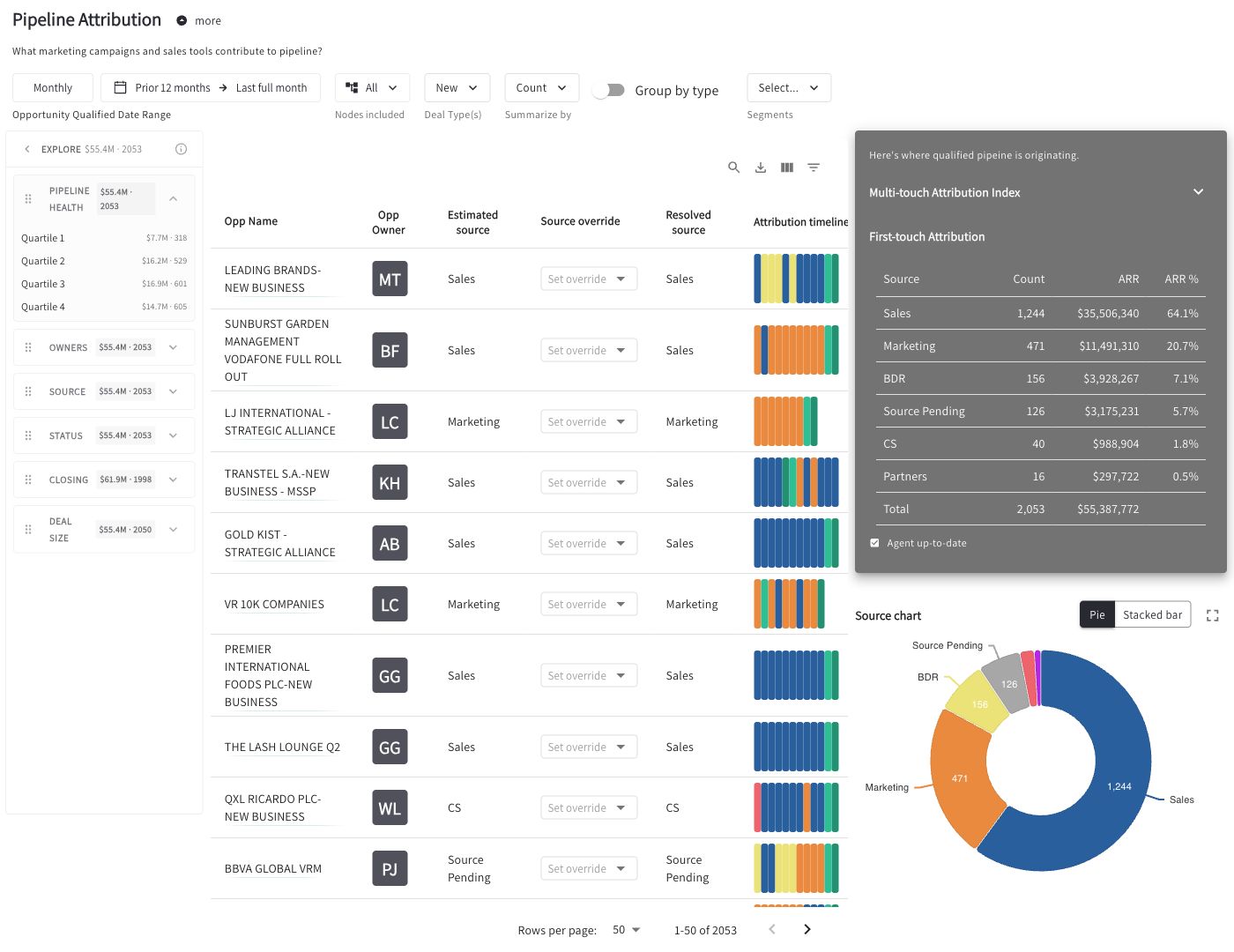
Connect attributed pipeline to the activity behind each opportunity. Inspect the touches and source mix before deciding where to focus the next campaign.
Trusted by








Make the contribution visible.
A source label is only the start of the story. See how marketing campaigns and sales activity connect across the people involved in an opportunity.
- Follow the activity timeline behind each opportunity.
- Inspect the campaigns, contacts, and dates behind a flow.
- Compare sources using consistent relationship and look-back rules.
- Bring the same deal evidence to the revenue review.
Put campaign spend beside the outcome.
Compare recorded spend with the opportunities created, qualified, and won. Inspect the campaigns behind the totals before deciding what to scale or change.
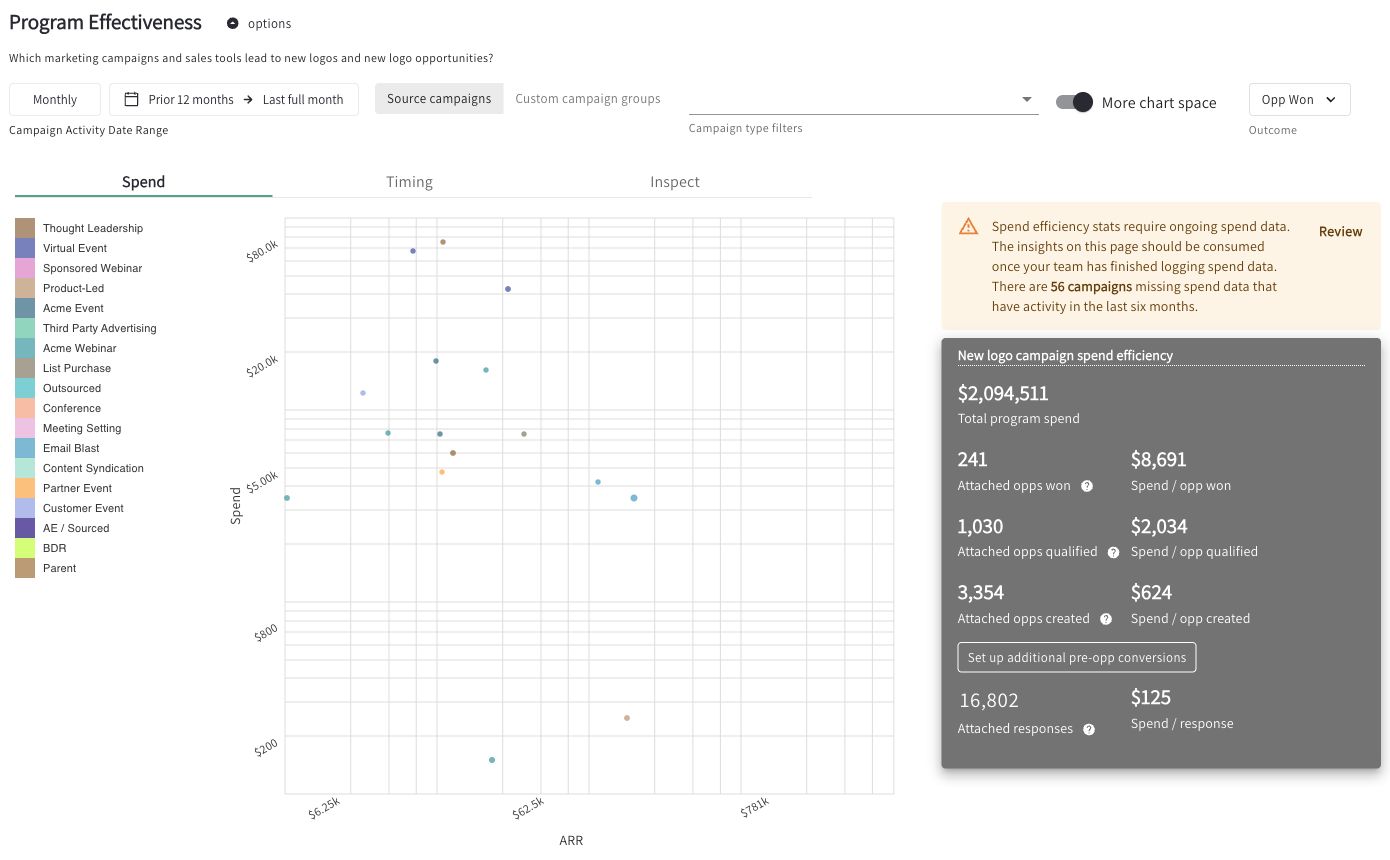
Compare campaign spend with associated outcomes while keeping missing costs visible. Use the gaps and results together when reviewing investment.
Follow the economics
Move from response volume to cost per qualified opportunity and cost per win.
Keep the comparison fair
Review the reporting window, campaign maturity, and missing spend alongside the result.
Discuss the next investment
Bring campaign-level evidence to the budget conversation with Sales and Finance.
Find the demand that progresses.
Connect campaign performance to what happens next. Find the conversion, timing, and buyer patterns worth acting on.
Which demand becomes pipeline?
Compare conversion by source, campaign, and segment. Look beyond response volume to the opportunities that qualify and progress.
Where does momentum stall?
Inspect time to qualification, stage falloff, and follow-up timing. Separate a demand problem from a handoff or progression problem.
Why do buyers say no?
Review AI-derived win and loss reasons alongside the deal evidence. Use recurring patterns to shape messaging, targeting, and the next experiment.
Give AI the evidence behind the question.
Ask Claude or Codex to investigate a pipeline shortfall or a change in campaign performance. QFlow supplies governed context and repeatable calculations, so you can review the analysis behind the recommendation.
Use the findings to refine targeting, test a message, or pressure-test next quarter’s pipeline assumptions. Turn the evidence into a focused experiment, then review what changes.
Connect the findings to your growth planQuestions for your next review
- Which campaign cohorts generate qualified opportunities, and which mostly generate responses?
- Where are deals from our target segments stalling, and what does the win/loss evidence say?
- What would need to change in pipeline creation or conversion to reach next quarter’s plan?
“I've rarely seen a product help usher in the type of alignment we've achieved while using QFlow.ai. The ROI has been huge, but nothing compared to the cost of inaction.”
Before your next marketing review
How does AI fit into marketing analysis?
QFlow gives Claude and Codex governed business context and deterministic calculations for recurring analysis. Use AI to investigate changes, explain patterns, and draft recommendations. In win/loss analysis, inspect the explanations and supporting evidence behind the classifications. Your team decides what to test and where to invest.
Can we trace attribution back to the deals and touches?
Yes. Attribution views connect opportunity records with contact and campaign activity under your configured relationship and look-back rules. Drill into the opportunities and individual interactions behind a flow. Keep those rules and the reporting period consistent when comparing results.
Does attribution prove that a campaign caused revenue?
No. Attribution shows the observed relationships between activity and outcomes under the selected rules. It does not establish incremental lift on its own. Use the evidence to form hypotheses, then test changes before treating a pattern as a causal result.
What data do we need to compare campaign economics?
Start with campaign activity, linked contacts and opportunities, agreed outcome definitions, and recorded campaign costs. QFlow flags missing spend so incomplete cost data stays visible. Compare like-for-like periods and allow time for newer campaigns to produce outcomes.
Bring evidence to the next budget conversation.
See how your campaign activity connects to pipeline, bookings, and the decisions ahead.