Conversion and deal analytics
Define the conversion. Understand the deal.
Build repeatable custom analysis around the events that matter to your business. Then inspect deal summaries, buyer conversations, and win/loss themes to understand the results.
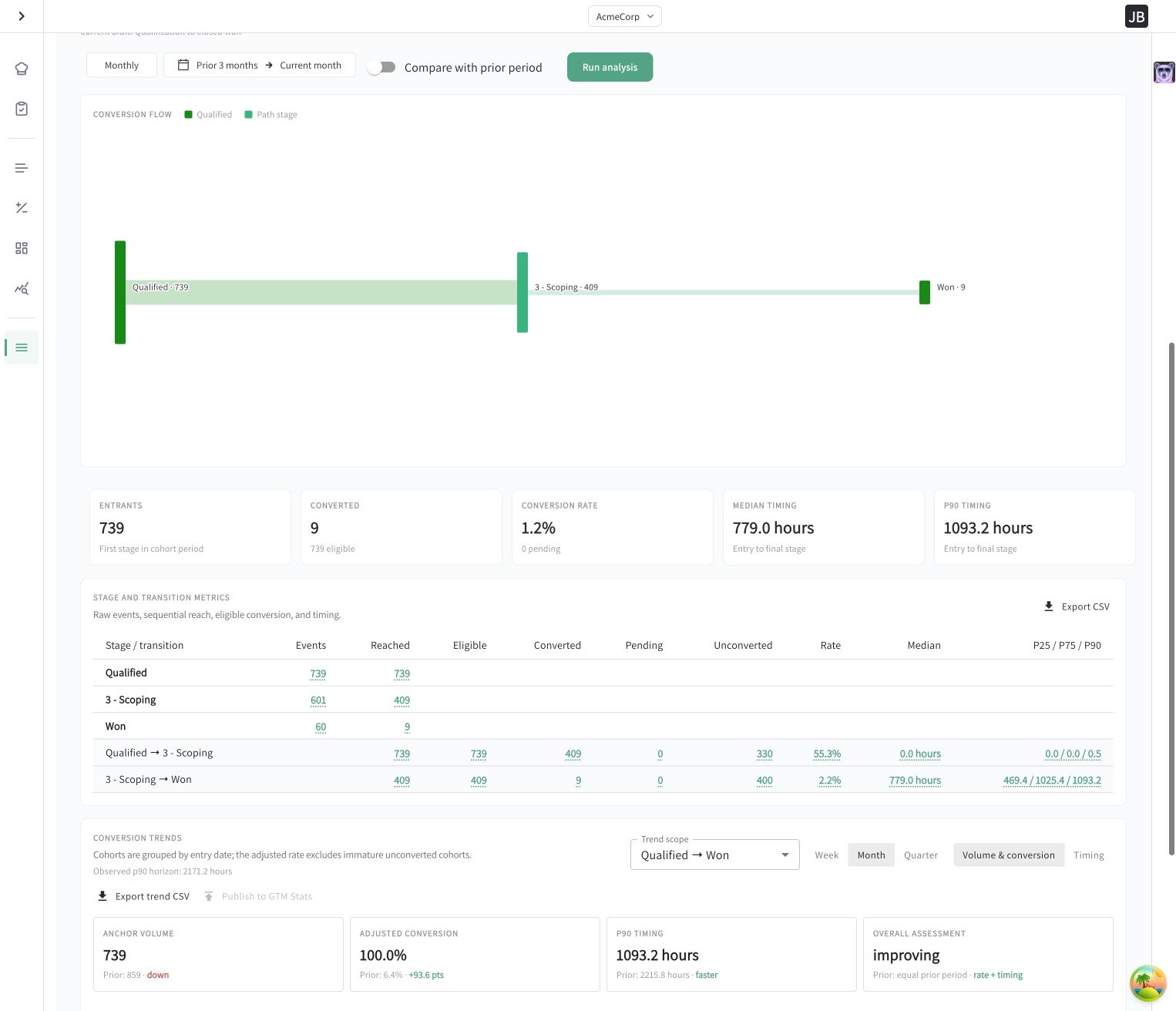
Define the conversion path that matches your business. Compare progression and timing, then inspect the records behind each step.
Trusted by







Your questions. Your conversion rules.
From first engagement to a closed deal, define the motion you want to understand and return to it with the same analytical rules.
Define your conversion
What counts as progress in your business?
Choose the events that matter: a campaign response, a qualified opportunity, a stage change, or a win. Set the sequence and time window so the question has a precise definition.
Repeat the analysis
What changed since the last review?
Reuse the same conversion rules across periods and cohorts. Compare conversion rates, time between events, and the opportunities that did or did not advance.
Inspect the deals
What happened in the buyer's own words?
Read deal summaries alongside calls, emails, and notes. Connect the conversion pattern with the objections, priorities, and competitive themes behind wins and losses.
Inspect the deals behind the conversion.
A stalled opportunity is more than a row in a funnel. Inspect the deal summary and the unstructured evidence behind it: what the buyer needed, what they questioned, and what changed.
- Read deal summaries in the context of the opportunity and its outcome.
- Bring call transcripts, emails, and CRM notes into the investigation.
- Compare the objections and buying priorities behind won and lost deals.
Connect account interactions to the buying journey. Use the recorded activity to investigate deal outcomes and add context to win/loss analysis.
Find the pattern across wins and losses.
Combine conversion analysis with AI-powered win/loss insights to decide what deserves a closer look, a different message, or a change in the sales motion.
Find where progress changes
Compare conversion and time between events across periods or cohorts. Identify the stage or interaction where more deals stall, drop out, or advance.
Read what buyers actually said
Use deal summaries and selected unstructured sources to investigate recurring objections, competitive pressure, and buying priorities. Review the evidence behind AI-derived win/loss themes.
Bring the learning back to the motion
Use the findings to sharpen campaign messaging, qualification, and deal coaching. Keep the conversion definition consistent so the next review starts from the same basis.
Custom analysis you can reuse
Build the analysis once. Keep asking better questions.
QFlow recipes and published skills bring governed conversion definitions and deterministic analysis into Claude and Codex through QFlow Desktop. Reuse the calculation, inspect the deals, and let AI help explain the differences with the supporting evidence in reach.
Explore QFlow DesktopBring your own business question
- Which qualified opportunities reached validation, and how long did it take?
- What do deal summaries reveal about buyers who stalled after a demo?
- Which objections appear in lost deals but are resolved in the deals we win?
A closer look at conversion and deal analysis
Can we define our own conversion events?
Yes. Build conversion definitions around the events available in your connected systems, including activity, campaign participation, opportunity creation, stage changes, and outcomes. Choose whether the analysis follows people, accounts, or opportunities, then make the sequence and conversion window explicit.
What makes the analysis repeatable?
Save the conversion definition so each review uses the same event rules, relationships, and timing criteria. Rerun it for a new period or cohort instead of rebuilding the logic in a spreadsheet. Recipes and published skills can carry that defined analysis into recurring work with Claude and Codex.
Can we inspect the deals behind a conversion rate?
Yes. Inspect the records behind the result, then use deal summaries and account context to investigate individual opportunities. Bring the numerical pattern together with the available calls, emails, notes, and opportunity history to understand what happened.
How do call recordings and other unstructured data fit in?
QFlow connects available transcripts and summaries from Gong, Salesloft, and Clari Copilot with CRM activity and opportunity context. Deal summaries make that material easier to inspect. AI-powered win/loss analysis can identify recurring themes in selected source fields, with explanations and supporting evidence for review.
How should we use win/loss insights alongside conversion analysis?
Use conversion analysis to find where progress changes, then inspect the won and lost deals behind that pattern. Compare buyer priorities, objections, and competitive themes to inform messaging, qualification, and coaching. The observed pattern guides investigation; it does not prove that a particular interaction caused the outcome.
Make your next question repeatable.
Start with a conversion you care about. Connect the result to the deals, conversations, and outcomes behind it.