Your booking forecast is not your revenue forecast.
Turn sales scenarios into a consistent, traceable view of recognized revenue—even when contracts combine subscriptions, usage, services, and one-time fees.
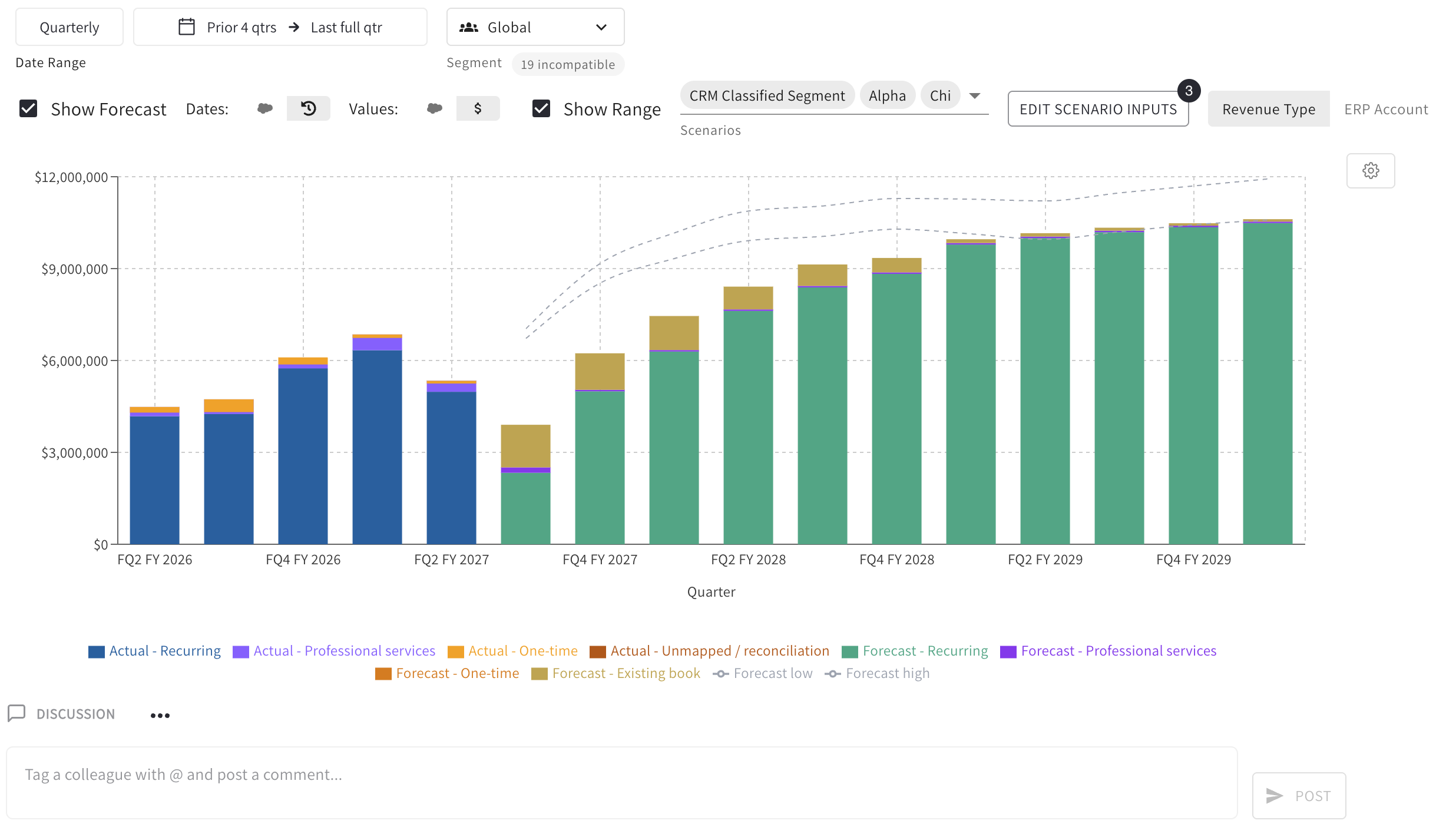
One repeatable translation, every time
CRM, CPQ, billing, and the general ledger answer different questions. QFlow Revenue Agent connects them without hiding the handoffs in a spreadsheet.
01
Scenario
New, expansion, renewal, and future-pipeline bookings
02
Value
Known deal values first; governed assumptions fill gaps
03
Recognition
Each revenue stream follows its service period and timing
04
Actuals
Mapped accounting results replace estimates as months close
Expected value versus actual usage
Model how customers use what they bought.
For usage revenue, expected value can come from estimated units, a realization rate, and price per unit. Assumptions can vary by segment and contract month. Where invoice history exists, QFlow can learn the realized revenue curve per booked ARR, TCV, or amount.
As accounting periods close, mapped actual revenue replaces the estimate. Finance can see what changed instead of silently overwriting the plan.
Expected usage
Units × realization × price, with optional month-by-month profiles
Realized usage
Historical invoice curves show realized dollars against the booking basis
Accounting actuals
Closed periods take their mapped values from the books
A hybrid contract should not become one blended curve
Give each revenue stream its own value source and recognition behavior. Known CRM and CPQ values take priority; governed assumptions fill only the blanks.
Recurring
ARR balance and contract-term recognition
Usage
Estimated units × realization × price, or a learned invoice curve
Professional services
Known services value or a configured fallback, recognized over delivery
One-time / hardware
Point-in-time or service-date recognition
Other
A governed stream for business-specific revenue
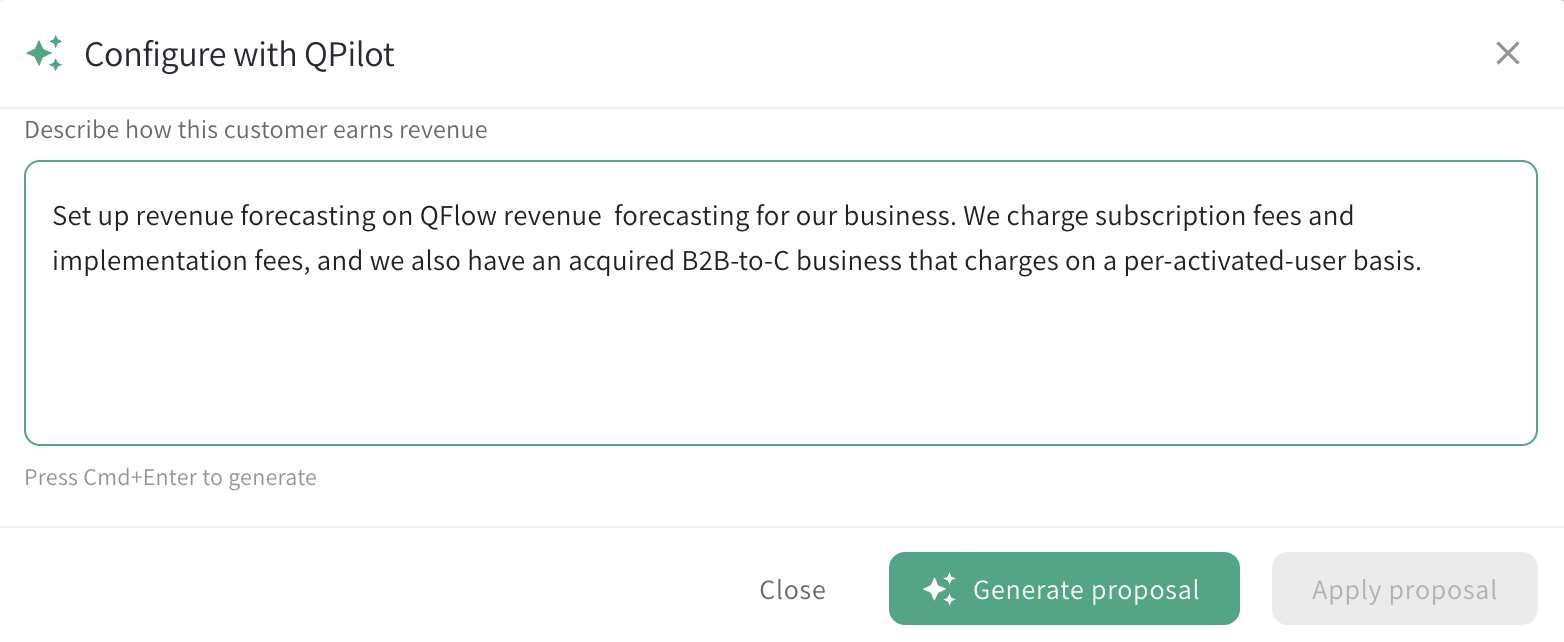
Complex revenue recognition rules, handled in one model
QFlow Revenue Agent handles complex revenue recognition rules, including SSP-based allocations, by carrying governed transaction and quote-line values into stream- and service-date-aware schedules.
For physical products, source-system policy can also reflect delivery, acceptance, returns, warranties, and gross-versus-net conclusions before QFlow carries the resulting value and timing into the forecast.
Bridge what is already committed to what may still close
Revenue already under contract remains separate from revenue created by future bookings. Invoice-backed deferred revenue, reconstructed contract schedules, and mapped accounting actuals form a visible handoff rather than a hidden adjustment.
Recognized actuals
Posted income-statement revenue by mapped stream
Existing contract revenue
Billed-but-unearned and committed-unbilled recognition
Future booking revenue
Scenario bookings carried through stream-specific schedules
Monthly forecast trace
$1.54M
Existing contract revenue
Invoice and contract schedules
$0.42M
Recurring revenue
12 opportunity and cohort contributors
$0.18M
Usage revenue
Expected units and realization profile
$0.06M
Services and one-time
Known CPQ values and service dates
Illustrative trace layout; values shown are sanitized examples.
A forecast finance can explain—and change
Drill into a month to see the revenue streams, contracts, opportunity cohorts, source values, assumptions, and accounting rows that produced it.
One forecast that connects commercial scenarios to recognized revenue
A visible bridge between existing contracts and future bookings
Closed-period actuals beside forecast periods, not in another workbook
Monthly drilldowns that show the contracts, opportunities, and accounting rows behind the total
Revenue forecasting with QFlow
Build a revenue forecast that follows the business
Connect bookings, expected and actual usage, recognition schedules, SSP, existing contracts, and accounting actuals in one consistent forward model.

Product