Plan the Growth
See the whole growth plan.
Connect growth scenarios, sales forecasts, revenue timing, and performance drivers. Plan beyond the quarter, with the evidence to keep adjusting.
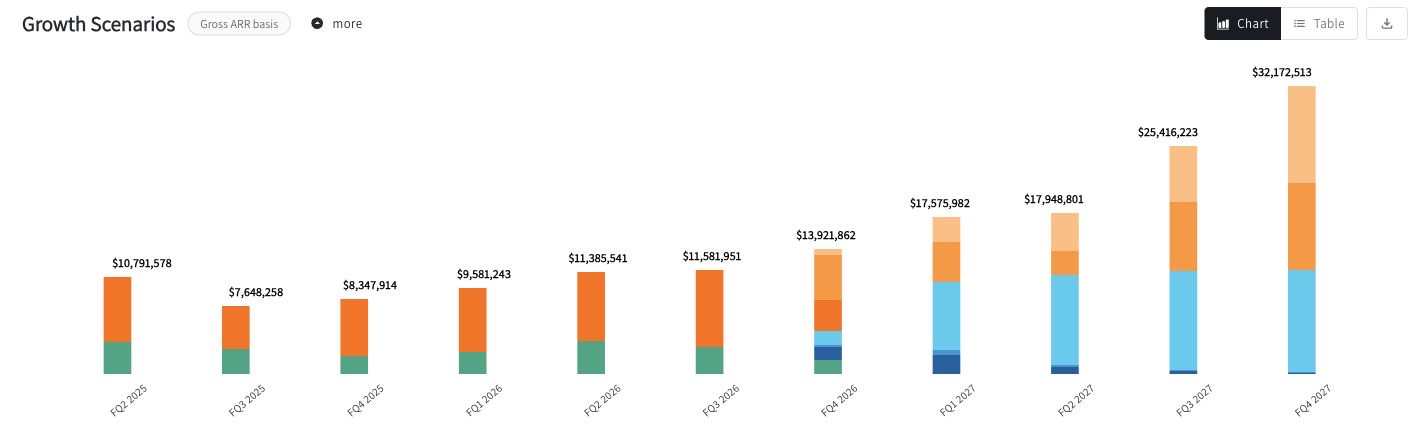
See how booked business, known pipeline, and future growth assumptions contribute to the quarters ahead. Compare the outcomes as the plan changes. Values use a Gross ARR basis.
Four connected views of growth.
From the next forecast call to the long-range plan, give Sales, Marketing, and Finance a shared basis for decisions.
Growth Scenarios
What could the next three years look like?
Explore demand, conversion, deal value, and timing across segments. Compare rolling 36+ month scenarios with booked business and known pipeline.
Explore growth scenariosSales Forecasting
What can we commit to this quarter?
Bring rep judgment, opportunity rollups, and AI deal insights into the forecast. Inspect the deals and changes behind the team's call.
Explore sales forecastingRevenue Forecasting
When will the plan become revenue?
Connect bookings and the existing customer book to revenue timing. Review recurring, services, and one-time revenue alongside accounting actuals.
Explore revenue forecastingPerformance Driver Analysis
Which assumptions need to change?
Investigate demand quality, conversion, deal mix, and timing. Follow the pattern into the underlying deals before updating the plan.
Explore performance driversGround the plan in the deals.
Start with what Sales expects to close. Compare the team's call with opportunity evidence, then test the future demand needed beyond that pipeline.
Inspect the opportunity rollup and the exceptions behind the forecast. Each bucket includes the buckets to its right, keeping the cumulative view clear.
Carry the outlook through to revenue.
A bookings target is only part of the financial picture. Bring the existing customer book, new business, and service timing into the revenue outlook.
Accounting actuals and future revenue by stream, with a range around the forecast.
Keep the assumptions honest.
When results move, investigate the drivers. Has conversion changed? Is the deal mix different? Did revenue move into a later period? Use the findings to revisit the scenario.
Make the next planning review easier.
Use Claude or Codex through QFlow Desktop and MCP to investigate changes. Put recurring analysis in Recipes and your review method in skills, so each planning cycle builds on the last.
Planning with QFlow
How do the four planning products fit together?
Sales Forecasting examines the current pipeline and the team's call. Growth Scenarios adds assumptions about future demand and performance across 36 or more months. Revenue Forecasting examines the financial timing of bookings and the existing book. Performance Driver Analysis helps explain what changed and which assumptions deserve another look.
Can different teams and segments use different assumptions?
Yes. Use segment-level monthly inputs where selling motions differ. Marketing can examine future demand, Sales can review conversion and deal commitments, and Finance can evaluate the financial timing. Keep those assumptions explicit so the teams can compare alternatives and agree on the plan.
Are bookings, ARR, and revenue interchangeable?
No. Keep the metric basis visible. The growth scenario shown here uses Gross ARR deal values; it is not an ending ARR balance or a recognized-revenue schedule. Revenue forecasts use configured revenue streams, service timing, and accounting data to examine those separate outcomes.
Can we use AI to review the plan?
Yes. QFlow Desktop and MCP give Claude or Codex access to governed business context and analytical tools. Recipes make recurring analysis repeatable, while organizational skills can carry your review method forward. Your team reviews the evidence and decides which assumptions to adopt.